
The Fall and Rise of

Callum
Blain

Reagan and Gorbachev are edging toward peace. Somebody in Moscow would rather burn it down. The man Britain sends to stop them has been dead for years. Officially.

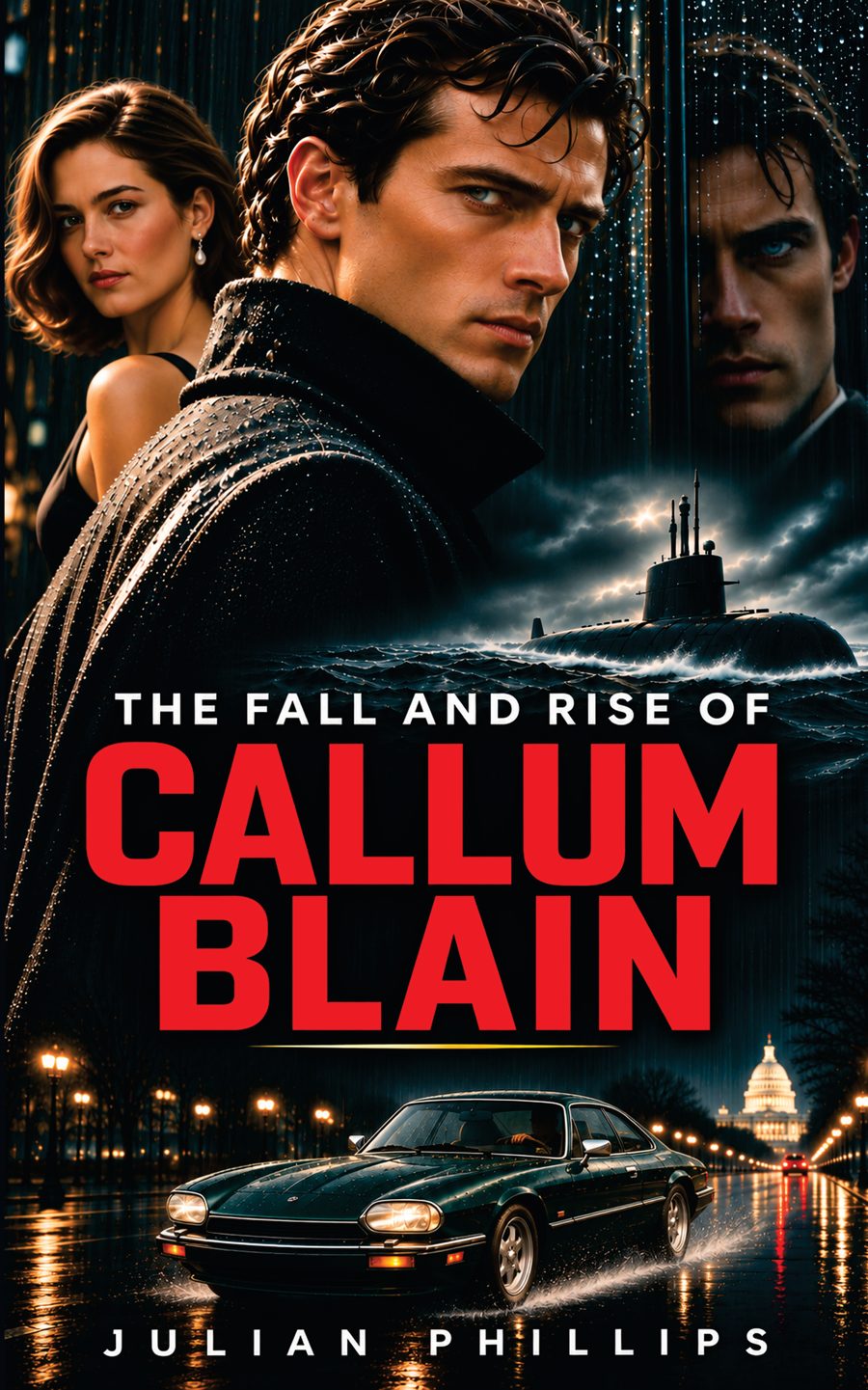
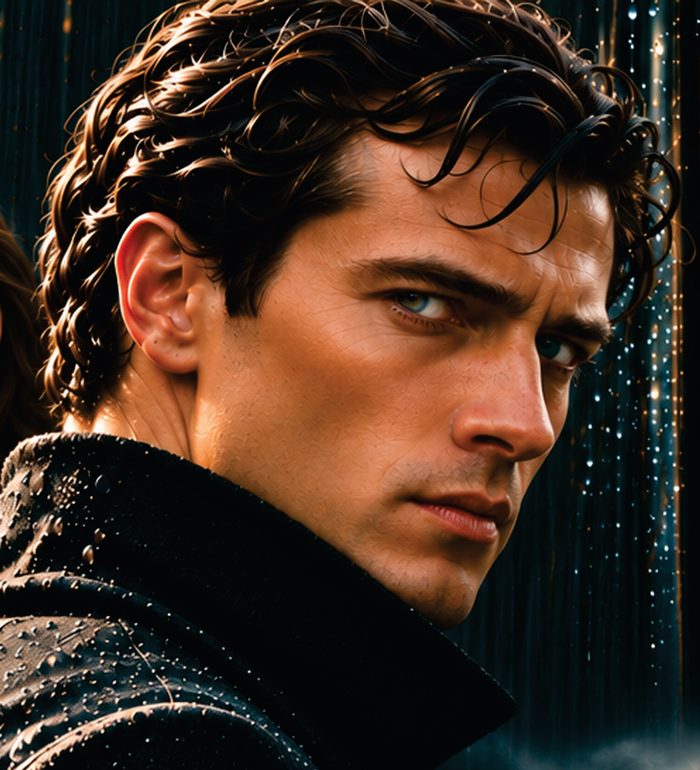
Book cover of The Fall and Rise of Callum Blain by Julian Phillips: Callum Blain in a rain-soaked coat, Moira Quinn behind him, a submarine in a storm and a green Jaguar on a wet Washington avenue below the Capitol. Book One · Out now
REEL 01

The Interrogation Room

Sit down. The lamp stays on. Every question below is one the book answers, eventually. Our file notes are spoiler-free, which is more courtesy than Moscow ever extended.

Washington, D.C., 1988. A network of Soviet sleeper agents has been switched on across the American capital, with orders to sabotage the fragile thaw between East and West. Callum Blain, a British intelligence officer working under diplomatic cover at the British Embassy, is pulled into the hunt alongside an ambitious CIA officer.

Blain is sophisticated, a man of refined tastes and no stranger to violence. He moves through Washington society with ease while carrying a past that few would believe and fewer are permitted to know. As the trail runs from embassy drawing rooms to a Virginia shipyard, his relationship with the brilliant Moira Quinn threatens to complicate a life built on secrecy. Old enemies return. Allies turn. And the truth Blain is chasing may cost him everything he has fought to protect.

Operation
Stop a staged provocation designed to wreck the superpower peace talks
Theatre
Washington, D.C. and Hampton Roads, Virginia
Backstory
Edinburgh, the Falklands, Northern Ireland
Opposition
KGB hardliners who think Gorbachev is selling out the Motherland
Series
Book One of the Callum Blain novels
Who was the real Callum Blain?
SAS, then MI6. Born in Hong Kong, schooled in Singapore, Royal Green Jackets. He vanished six weeks before chapter one began, during a maritime operation near Vladivostok. No body. No gloating Soviet press conference. In this business, silence is never nothing.File note · Chapter One
How do you kill off a Scots Guards captain without firing a shot?
With a press release. Internal haemorrhage, a brief MoD statement, a headstone and a posthumous mention in dispatches. Anthony Wheeler of the Secret Intelligence Service calls it erasing every footprint.File note · Chapter One
Why would anyone in Moscow want the Cold War to keep going?
Because some careers only make sense with an enemy. To the old guard, Gorbachev's détente is surrender in a better suit. They don't want secrets. They want an incident so public and so provocative that Washington walks away from the table.File note · The Blue Room briefing
What can you hide inside a folded Metro timetable?
Enough to put one of America's newest nuclear attack submarines at risk. Watch the bench at the bottom of the escalator. Then watch who sits down next.File note · Washington Metro
Who is Moira Quinn?
She works in government relations for the International Red Cross in Washington. She meets Callum Blain at the Hay-Adams, and their adventures start from there.File note · The Hay-Adams
What story does the scar above his left brow tell?
One nobody at the embassy will ever hear. It involves a hessian sack that smelled of diesel, a canvas roll of surgical blades, and a captor who said he would finish the job after Mass. He never got the chance.File note · Operation Blackthorn
Why carry a pistol the Service never issued?
Because it was the pistol that got him out. When Wheeler handed him a new life, Blain set three conditions: move the money, keep his father's watch, keep the Browning. "That's not regulation." "I wasn't asking."File note · Chapter One
Can a man who officially died ever risk falling in love?
Every rule he was taught says a single woman at the Hay-Adams bar, too quick with a smile, is a honey trap. Every instinct he has says otherwise. One of them is about to be proven very wrong.File note · The Hay-Adams

Ask the Registry

Our AI archivist keeps the files on Callum Blain, Moira, Wheeler, Drake and the world of 1988. Type or talk to it using the Ask the Registry button in the corner of the screen. It knows the opening chapters inside out and will not spoil the ending, however nicely you ask.

REEL 02

Personnel Dossiers

Four files that will travel with you through the series. Treat them as you would any intelligence product: accurate as far as it goes, and it never goes quite far enough.

Top Secret
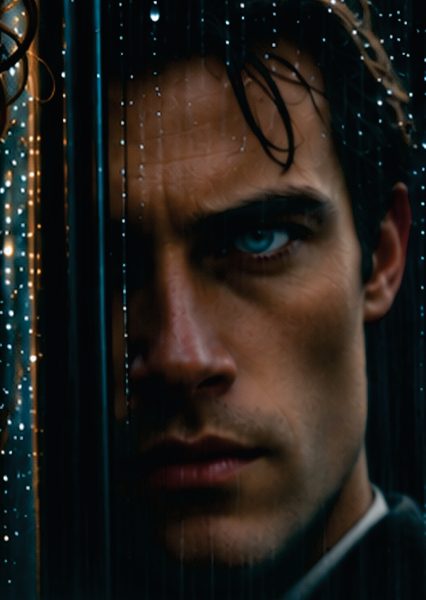
Callum Blain, dark-haired with a hard, watchful stare, rain on his collar.

Callum Blain

British Embassy · Cultural Liaison (cover)

Subject operates under diplomatic cover at the embassy on Massachusetts Avenue. Description of duties: ██████████████.

Previous identity
Capt. Cameron Macrae, Scots Guards. Status: deceased, per MoD.
Age
28 (October 1988)
Height / build
6 ft 1 in. Lean, broad-shouldered.
Marks
Thin scar below the left brow.
Education
Fettes College, Edinburgh. RMA Sandhurst, commissioned 1979.
Service
2nd Bn Scots Guards, Mount Tumbledown 1982. 14 Intelligence Company, Northern Ireland. ████████
Sidearm
Browning Hi-Power, Belgian-made, no military markings.
Vehicle
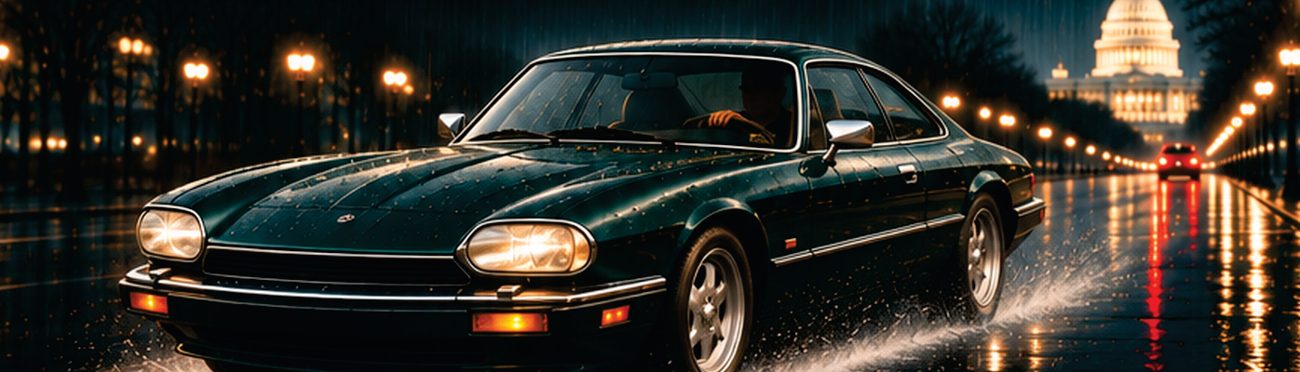
Jaguar XJ-S V12 coupé, British Racing Green.
Watch
Breitling. His father's. Never removed.
Vices
Highland malt, Saint-Émilion, a good claret. Does not smoke. Cannot resist apple crisp.
Residence
The Cloisters, Georgetown.
Assessment. A gifted mimic who can wear an accent like a coat. Composed to the point of concern. Sandhurst noted he "lacked deference to seniority". Another instructor wrote: "Knows his mind, could be dangerous with a following."

"If you want to live, you'll have to stop being you."

Restricted
Moira Quinn, shoulder-length dark hair, pearl earring, a level gaze.

Moira Quinn

International Red Cross · Government Relations

Based in Washington, D.C. Frequently overseas. First contact with B.: the Hay-Adams bar.

Nationality
British. Accent: polished Home Counties over a Belfast lilt she prefers you not to notice.
Education
Cheltenham Ladies' College. Cambridge.
Field record
Beirut, Managua, Kabul. Wherever there are bodies, bandages and a thin line between mercy and chaos.
Appearance
Dark hair, dark clear eyes. Wears a Cartier Tank.
Correspondence
Regular airmail to County Tyrone. Contents: ████████████
Threat level
Unknown. Rising.
Assessment. Brain and beauty sharpened into a kind of dangerous grace. Listens more than she speaks and notices what others leave out. Every hallmark of entrapment, according to the rulebook. B. appears to have mislaid the rulebook.

"Will I see you again?" "Try bloody stopping me."

Eyes Only
NO PHOTOGRAPH

Anthony Wheeler

Secret Intelligence Service ("Six")

Grade and department: not disclosed, even to people with clearance to ask.

Age
Mid-fifties.
Appearance
Tall, lean. Silvering hair swept back from a high forehead. Long, patrician face, narrow nose, thin lips. Pale grey eyes that miss very little.
Dress
Navy overcoat, charcoal suit, leather gloves removed with deliberate care.
Voice
Low, measured, Oxbridge. Polished by decades of Whitehall corridors.
Habits
Offers no handshake on first meeting. Lunches at 1789 in Georgetown: Dover sole, mineral water.
Known for
Making people disappear, on paper.
Assessment. Moves agents like chess pieces and is rarely caught looking at the board. Admires steel in a young officer but would sooner die than say so. What he knows about the Macrae family is █████████████████.

"And if I refuse?" "You won't."

NOFORN
NO PHOTOGRAPH

Cassian Drake

Central Intelligence Agency

Described by colleagues as one of Langley's best. Described by himself in similar terms.

Appearance
Tall, lean, too well pressed for the hour. Hair combed back, grey at the temples, a boyish face that makes it more dangerous.
Dress
Dark navy double-breasted suit, discreet cufflinks.
Sidearm
Colt M1911, .45 ACP.
Vehicle
Oldsmobile. Drives it like he expects the barrier to lift.
Drinks
Manhattans. Bourbon when the news is bad.
Prior ops
Nicaragua, 1985. Liaison with the Contras. "Christ, it was a mess."
Meeting places
The Hay-Adams. A bench in Lafayette Square, feeding the pigeons.
Assessment. Expensive, contained, and not to be underestimated. Has the stillness of a man who has spent time on rooftops in cities that no longer make the news. His history with one of the people on his own watch list is ██████████.

"I judged you well. Your instincts are exactly what I hoped they'd be."

REEL 03

Locations & Postings

Callum Blain's life runs across four very different places. Here is what each was like when he passed through, and where to find it in the book. More postings will be added as the series travels.

The history

Scotland's capital is two cities stacked together. The medieval Old Town runs down the Royal Mile from the castle rock to Holyrood. The Georgian New Town, laid out to James Craig's plan from 1767, is all crescents, columns and cold-water civility. Robert Louis Stevenson grew up at 17 Heriot Row. Fettes College opened in 1870 in a building that looks like a Gothic fairy tale with a rugby pitch.

In the 1980s

A grey stone city smelling of hops from the breweries and coal smoke from the chimneys, wrapped in sea fog the locals call the haar. Every August the Festival and Fringe filled it with performers. Behind the postcard, Leith's docks were in decline and housing schemes like Muirhouse were fighting a heroin epidemic. The 1979 devolution vote had stalled, and the city's pride in being Scottish ran hot under a Westminster it had not voted for.

In the book

  • Heriot Row. The Georgian townhouse where Cameron Macrae was born on a sleet-slicked January morning.
  • Fettes College. Where the prefects called him "Macrae of the Mist" and he learned to vanish emotionally.
  • The Trossachs. Weekends of Kipling by the fire and a .22 held steady.
  • Glencoe. A wet road, a V8 Rover, and the day that made him.
The history

A windswept archipelago of peat, rock and sheep roughly 300 miles off the Argentine coast. British since 1833 and claimed by Argentina as Las Malvinas. On 2 April 1982 Argentina invaded. Britain sent a Task Force eight thousand miles south. After landings at San Carlos, the battle at Goose Green and a series of night attacks on the mountains around Stanley, Argentina surrendered on 14 June. Seventy-four days. 255 British servicemen, 649 Argentine personnel and three islanders were killed.

In the 1980s

About 1,800 islanders lived there in 1982, most of them in Stanley and the rest out in "camp", the countryside. Life ran on peat fires, Land Rovers, the radio and the supply ship. After the war came a permanent garrison, the new RAF Mount Pleasant airfield in 1985 and minefields that would take decades to clear. Back home, the victory reshaped British politics and helped Margaret Thatcher win a landslide in 1983.

In the book

  • The QE2. The cruise liner stripped of tuxedos and crammed with 5th Infantry Brigade.
  • San Carlos Water. Where the long march inland began.
  • Mount Tumbledown. The 2nd Battalion, Scots Guards' night assault on 13 to 14 June. Bayonets, broken ice and no anthems.
  • The mess tent, East Falkland. Pudding, a Para major called Keane, and an impression that changed everything.

The history

Created by partition in 1921, Northern Ireland slid into the Troubles in the late 1960s: a thirty-year conflict between republican and loyalist paramilitaries and the British state that cost more than 3,500 lives before the Good Friday Agreement of 1998. Plain-clothes army surveillance was handled by a unit so secret it went by a string of cover names. Soldiers just called it "the Det".

In the 1980s

The decade opened with the 1981 hunger strikes and the death of Bobby Sands, elected an MP from his prison cell. The IRA bombed the Conservative conference hotel in Brighton in 1984. Libyan weapons were shipped in by sea until the French seized the Eksund in 1987. Daily life meant army patrols, searches at the security gates around Belfast city centre, painted kerbstones and murals on the gable ends. From 1988 the voices of Sinn Féin leaders were banned from British broadcasts and dubbed by actors.

In the book

  • West Belfast, Derry, South Armagh. Long cold surveillance sits and gable walls that read ALL TOUTS WILL BE SHOT DEAD.
  • Ardboe, Lough Neagh. The accent Cameron had to pass for, especially after two pints.
  • Operation Blackthorn. Libyan arms, American cash and a shipment too big to ignore.
  • Beragh, Co. Tyrone. A parochial house where the morning post matters more than anyone knows.
PENNSYLVANIA AVE · 23:40 · RAIN

The history

A capital built to order on the Potomac in the 1790s, laid out by Pierre L'Enfant with grand avenues cutting diagonally across a grid. Embassy Row runs along Massachusetts Avenue, where the British Embassy has occupied its Lutyens building since 1928. Georgetown, older than the city around it, keeps its cobbles, row houses and secrets.

In the 1980s

Reagan's town. The press called 1985 "the Year of the Spy" after a run of arrests, and that November KGB defector Vitaly Yurchenko walked out of a Georgetown restaurant and back to the Soviets. In December 1987 Reagan and Gorbachev signed the INF Treaty in the White House. By autumn 1988 Bush and Dukakis were fighting for the presidency, the Metro's vaulted stations were barely a decade old, and the crack epidemic was tearing through the city's poorer wards.

In the book

  • The British Embassy, Massachusetts Ave. Nicotine-stained ceilings and the Blue Room.
  • The Hay-Adams. Across Lafayette Square from the White House. Where Blain met Drake, and then Moira.
  • 1789, Georgetown. Wheeler's table.
  • Sholl's Colonial Cafeteria. Plastic trays, meatloaf and apple crisp.
  • The Soviet Embassy, 16th Street. Where couriers go in and sometimes come out.
  • Newport News, Virginia. The shipyard where it all comes to a head.
Next posting

Destination: ████████

Further locations will be declassified as the series continues. Wheeler has already decided. Blain has not been told.

REEL 04

Gadgets & Guns

No exploding pens. No laser watches. Callum Blain's world runs on real 1980s hardware: steel, film, rotary dials and a very fast British car.

The car

Jaguar XJ-S V12 Coupé

Registered to: C. Blain

British Racing Green, parked under a plane tree on Observatory Circle. The one indulgence Blain allowed himself on arriving in America. Elegant, understated and capable of devouring a highway without breaking stride.

Launched1975Engine5.3-litre V12Top speedabout 150 mphPaid for bya very discreet trust fund
Sidearm

Browning Hi-Power

Carried by: Blain

Belgian-made, no military markings, handed over years ago in a room with no windows and no questions. It got him out of a safehouse in Ulster. He cleans it every Sunday.

MakerFN Herstal, BelgiumCalibre9mm ParabellumMagazine13 roundsIn servicesince 1935
Sidearm

Colt M1911

Carried by: Drake

The American classic. Big, heavy, and very persuasive. US forces carried it from 1911 until the Army chose a replacement in 1985. Langley men of a certain vintage never got the memo.

Calibre.45 ACPMagazine7 roundsDesignerJohn Browning
The other side

Makarov PM

Carried by: Soviet personnel

The standard pistol of the Soviet military, police and KGB from 1951. Compact, blunt and utterly reliable. If you see one held steadily in your direction, it is already too late to be clever.

Calibre9×18mm MakarovMagazine8 rounds
Concealed

S&W .38 Snub-Nose

Carried by: ██████████

A short-barrelled revolver with a worn blued finish, the kind American detectives carry for convenience. Produced from a coat pocket by someone whose calm with a gun should worry you more than the gun.

Calibre.38 SpecialCapacity5 rounds
Surveillance

Olympus XA

Kept in: the Jaguar's glovebox

A palm-sized 35mm rangefinder with a sliding clamshell cover, loaded with Ilford HP5. Small enough to vanish in a coat pocket, sharp enough for the technical boys to pull a face out of the grain.

Introduced1979Lens35mm f/2.8Film36 exposures, then wait
Heirloom

The Breitling

Worn by: Blain, always

His father's watch. Colonel Lachlan Macrae was not wearing it the day the Rover went off the road. Years later, its case edge sawed through a captor's cord one patient hour at a time.

ConditionScratchedNegotiableNo
The prize

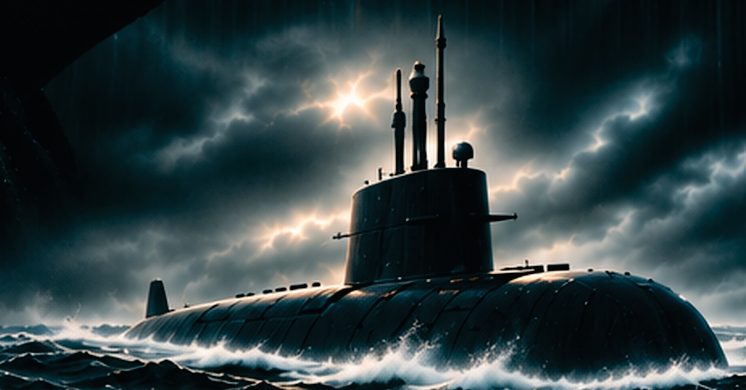
Los Angeles-class Attack Submarine

Building at: Newport News, Virginia

The pride of the US Navy's undersea fleet, wrapped in secrets about acoustics, sonar and reactors. A boat nearing her sea trials is a boat in transit, and a boat in transit is never quite as safe as the Navy would like.

HullSSN-750, USS Newport NewsPowerNuclear reactorStatusApproaching trials
Tradecraft

The Metro Timetable

Left by: a man in a hurry

A folded paper timetable left on a station bench. The oldest trick there is: an ordinary object nobody looks at twice, carrying information somebody would kill for.

CostFreeValueClassified
Communications

Rotary Telephone

Desk of: Blain, British Embassy

Army green, chipped and stubborn. No caller ID, no voicemail, no texting. When it rings, you answer it, and the voice on the other end says three words: "You're wanted. Three o'clock."

EncryptionSpeak carefully
Communications

The Phone Booth

Used by: anyone who wants no record

A folding glass door, a heavy handset and a slot for coins. Untraceable to you, if not to the people watching the booth. Blain makes his call, pushes the door open, and notices the brown Cadillac across the street.

CostA quarterPrivacyGlass walls
Personal stereo

Sony Walkman

Worn by: half of Washington

Launched in 1979, it turned every jogger into a sealed world. Perfect cover for a watcher, and a perfect distraction for anyone being watched.

Launched1979FormatCompact cassetteBatteriesAlways flat
The other car

Citroën 2CV

Driven by: a man named Reeves

French blue with a grey replacement panel on the rear quarter. Its tinny engine coughs to life among the Volvos and Buicks of a campus car park. Nobody looks twice at a 2CV, which is precisely the point.

Launched1948EngineTwo cylinders, air-cooledTop speedEventually
Accessory

Cartier Tank

Worn by: Moira Quinn

Designed in 1917 and named for the shape of the tanks on the Western Front. On Moira, mostly used to discover she is late for the State Department.

Since1917
REEL 05

The Cold War & the 1980s

Two superpowers, fifty thousand nuclear warheads between them, and a decade that began with fresh fears of Armageddon and ended with crowds on the Berlin Wall. This is the world Callum Blain works in.

  1. Margaret Thatcher becomes Prime Minister.
  2. The Soviet Union invades Afghanistan. Détente dies.
  3. Ronald Reagan is inaugurated.
  4. The Falklands War. Cameron Macrae goes south.
  5. Reagan calls the USSR an "evil empire" and announces the Star Wars missile shield.
  6. The Soviets shoot down Korean Air Lines Flight 007. 269 people die.
  7. NATO exercise Able Archer 83 is mistaken in Moscow for cover for a real attack. The world comes closer to nuclear war than almost anyone knows.
  8. Mikhail Gorbachev takes power in Moscow.
  9. "The Year of the Spy" in America.
  10. Chernobyl.
  11. Reykjavik summit. Reagan and Gorbachev almost agree to abolish nuclear weapons.
  12. "Mr Gorbachev, tear down this wall!"
  13. The INF Treaty is signed at the White House.
  14. A sleeper network wakes in Washington. Our story begins.
  15. The Berlin Wall falls.

No mobile phones

Motorola's DynaTAC "brick" arrived in 1983 at $3,995 with half an hour of talk time. Nobody you knew had one. If you were out, you were unreachable, which suited spies perfectly.

The Walkman

Headphones on, world off. Blain passes a jogger lost in his Walkman and two schoolgirls arguing over one. Joggers were everywhere. So, quietly, were watchers.

Everyone smoked

In offices, on planes, in embassies. Slim black Sobranies for theatrical Europeans, Lucky Strikes and Camels for the old American hands. Ceilings went beige. Blain abstained.

Four channels

Britain had BBC1, BBC2, ITV and, from 1982, Channel 4. America had the networks and the dawn of cable. News arrived at six and ten. Teletext pages filled the gaps.

Paper everything

Typewriters, carbon copies, manila folders and Filofaxes. Information you wanted to steal sat in filing cabinets, and you had to physically carry it out of the building.

Fax and telex

The fax machine was the height of office speed. Coded cables went by telex. A "secure line" meant a heavy handset and a voice that sounded as if it were calling from the bottom of a well.

The bomb in the room

Britain had Protect and Survive leaflets on what to do in a nuclear attack, and the BBC's Threads in 1984 showed exactly why they would not help. Everyone of a certain age remembers the dread.

Cars with character

No sat-nav, no parking sensors, no airbags as standard. Carburettors, cassette decks and a choke you pulled on cold mornings. A V12 Jaguar was a statement. So was a Citroën 2CV.

How a spy talked in 1988

The dead drop

Leave the message in an agreed hiding place. Your contact collects it later. You never meet.

The chalk mark

A stroke on a lamp post or mailbox means "drop loaded" or "meet tonight". Rain washes it away.

The brush pass

Two people pass in a crowded station. A newspaper changes hands in less than a second.

The one-time pad

A pad of random numbers used once, then burned. Unbreakable if used properly. Few people ever did.

REEL 07

The Author

Why a boy who grew up on Ian Fleming decided Britain needed a new kind of hero.

Julian
Phillips
Author · Speaker · Futurist
"I wanted a hero who was unmistakably British, and who paid for every secret he kept."
Also by Julian Phillips
  • Intelligent HumilityHow Humans Flourish in the Age of Machines
  • DatagentismHow Humans Tell Better Stories in the Age of Machines
  • LevAIthanA Brief History of Humanity and AI, written with Athena
All books on Amazon

About me

I am an Anglo-American technology executive, which means I have spent my career on both sides of the Atlantic, explaining each side to the other. That has given me a lifelong fascination with the space between Britain and America: the shared language that hides very different instincts, the "special relationship" that is warmest in public and most complicated in private. It is exactly the space Callum Blain works in.

The boy and the Bond books

I grew up with Ian Fleming's James Bond novels and Sean Connery's unforgettable portrayal of 007. Coming of age during the Cold War, I was captivated by that world: international intrigue, sophisticated villains, beautiful women, fast cars and extraordinary people operating in the shadows of diplomacy. The Berlin Wall was real. So were the warheads. The spies, it seemed to a boy reading under the covers, were the only people who knew what was really going on.

Here is a detail I have always loved. In You Only Live Twice, Fleming writes Bond's obituary and sends him to Fettes College in Edinburgh, his father's old school. When I needed a school for Callum Blain, there was only one candidate.

Why I wrote this book

Those early influences sparked a lifelong interest in espionage, history and the complicated relationship between loyalty, identity and betrayal. But as I grew older, I found myself asking the question the films never did. What does it actually cost a person to live a life of secrets? What happens to grief when you are not allowed to show it, or to love when you cannot tell the truth about who you are?

So I set out to build my own hero: distinctly British, Scottish by blood, shaped by the Falklands and Northern Ireland rather than by a casino table. Callum Blain has the tailoring, the malt whisky and the Jaguar. He also has a dead man's name, a scar he will not explain and a past that keeps writing to him. I wanted the elegance and adventure of the classic spy thriller with a darker, more honest look at the human cost of secrecy.

What comes next

The Fall and Rise of Callum Blain is the beginning of his story, set in a world where the Cold War may be ending but the dangers are far from over. Callum, Moira, Wheeler and Drake will all return. Wheeler has already chosen the next posting. I am not allowed to tell you where.

Julian Phillips
Ask the Registry